To guide advertisers through this complexity, we have developed our framework for Paid Modern Search. It connects business and audience understanding, data and campaign management, and performance measurement into a shared roadmap.


Search is happening in more and more places. People search on traditional search engines, ask questions to AI systems, discover offers on social media, and compare experiences in communities. Search, discovery, and decision-making are increasingly intertwined.
For companies, this makes setting the right priorities more challenging. Which areas of search deserve attention and budget? What is required for precise implementation? And how do we recognize success?
To guide advertisers through this complexity, we have developed our framework for Paid Modern Search. It connects business and audience understanding, data and campaign management, and performance measurement into a shared roadmap.
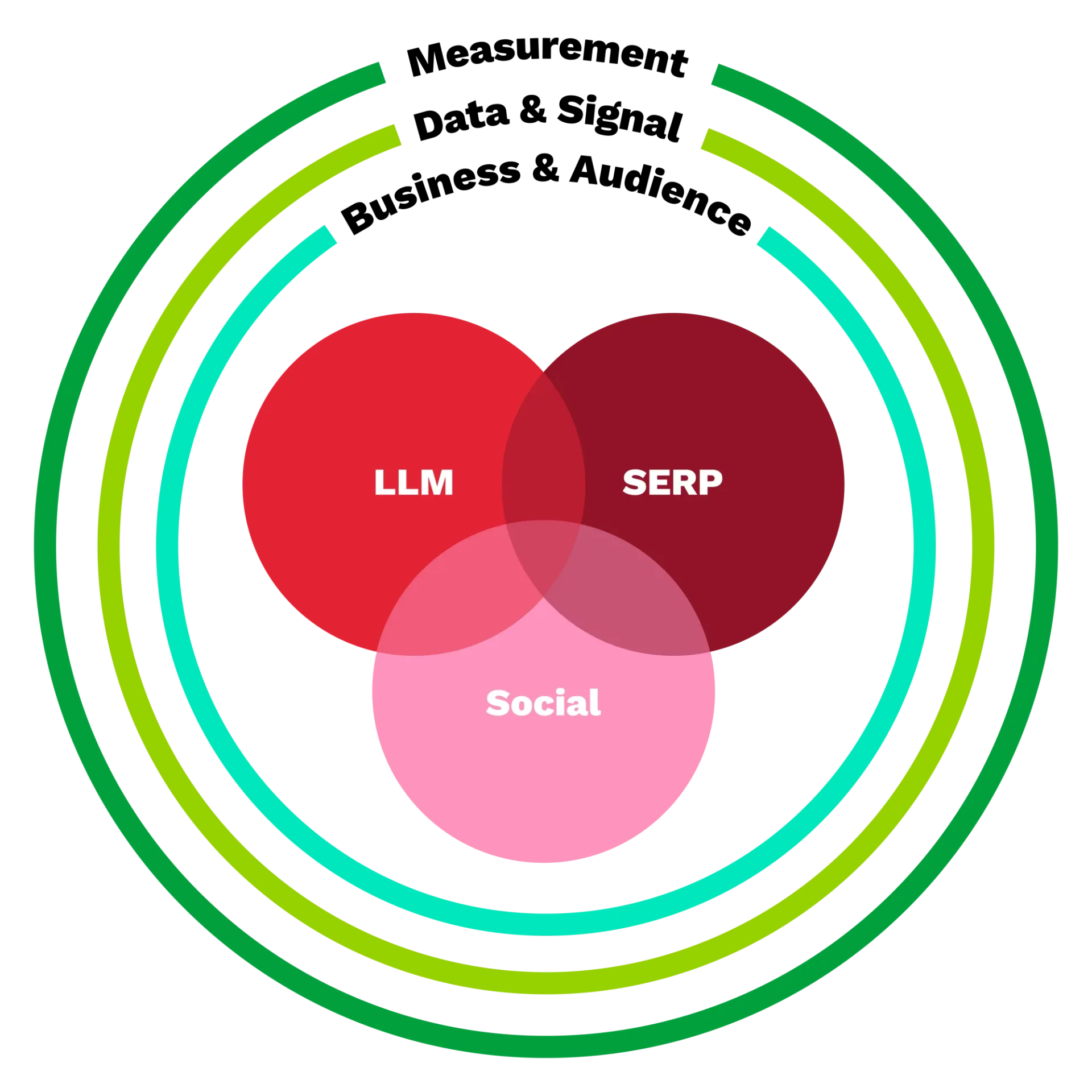
At the core are the different environments in which people search, discover, and prepare decisions: traditional search engine results pages (SERPs), AI chatbots based on large language models (LLMs), and social search. They differ in how people express their intent (e.g., significantly longer queries in LLMs than on Google), how they receive information, and how they engage with offers. People frequently switch between these environments.
The three layers in the model show which aspects companies must consider across these search environments:
These layers interlock: Business goals and target audience understanding set the direction. Data and signals support execution. Measurement provides insights that allow us to improve campaigns and re-evaluate priorities.
Thus, the framework provides a shared foundation to categorize new developments and shape Paid Search from strategic planning to performance measurement. Behind it lies a simple logic: do the right thing, execute with precision, and measure correctly.
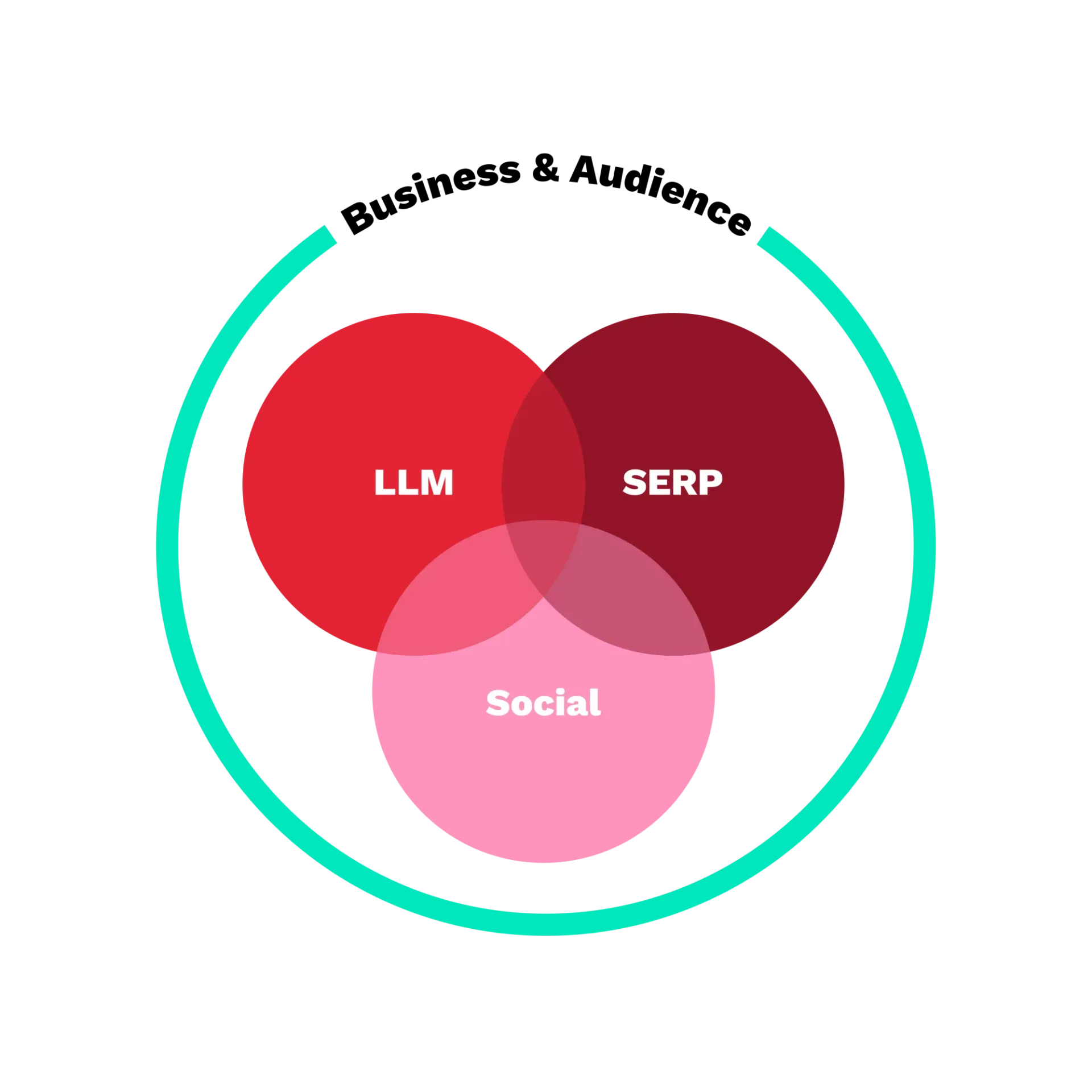
Selecting channels begins with understanding your own business and target audiences. What problem should Paid Search solve? Which people need to be reached? And what insights are already available? Only from this can you derive where and why investments should be made.
Therefore, on the first level of our model, Business & Audience, we first look at internal company foundations: business model and goals, current and desired target audiences, past experience, and the existing data and measurement foundation. This also includes the question of whether the business challenge can be solved with marketing in the first place and what contribution Paid Search can make.
These internal assumptions are then validated with external market and usage data. What matters is not only where a target audience is present, but also how they use the respective environment and what role it plays in their decision-making process.
For example, a platform may be relevant for inspiration, while concrete offers are compared elsewhere. Mere audience presence alone is not a sufficient basis for an investment decision. Only the connection between business objectives, target audience behavior, and usage context creates a solid foundation for clear priorities.
What you can do now:
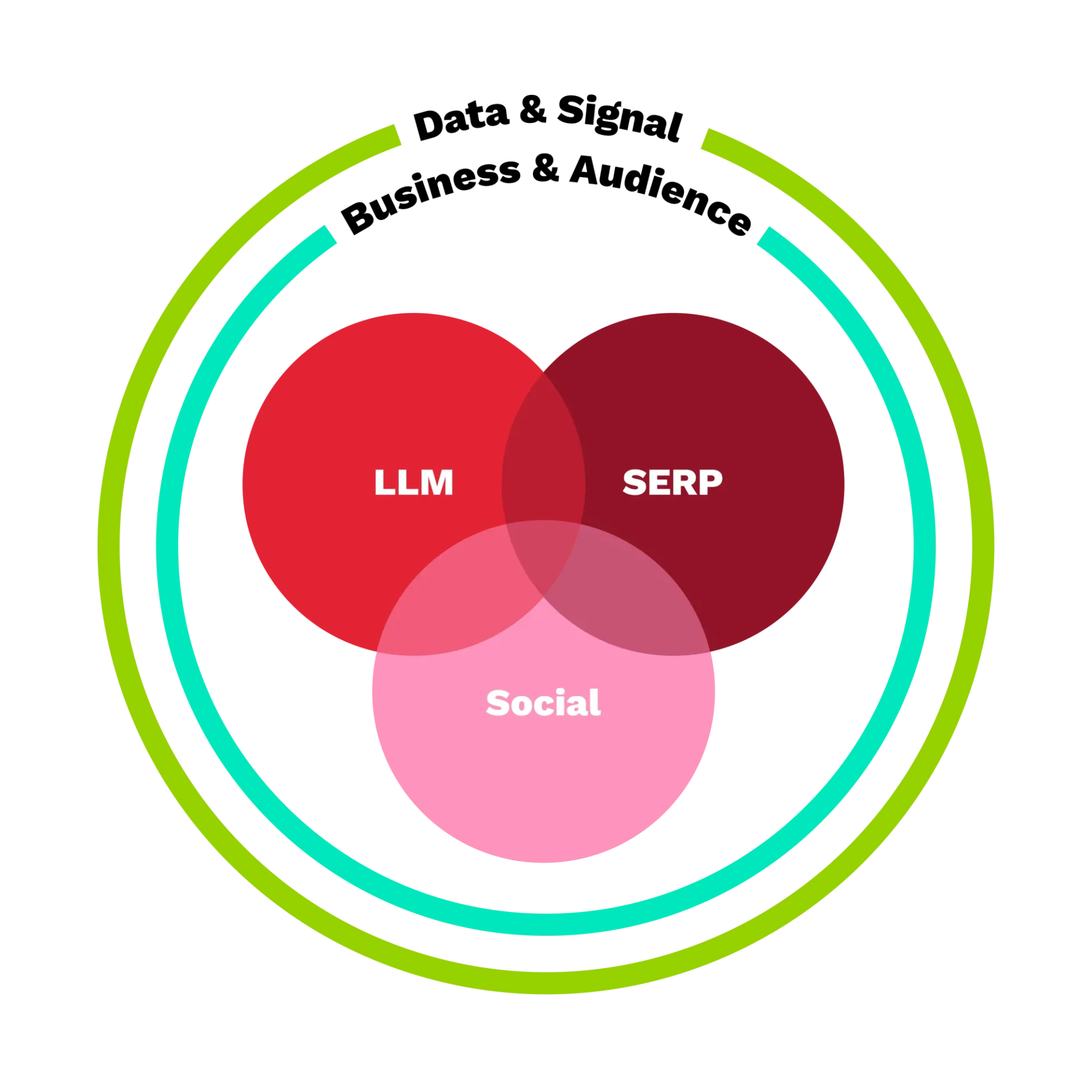
Once priorities are set, it comes down to execution: What information do systems need to deliver offers in the right context and optimize for desired outcomes
Keywords remain relevant. However, in conversational search environments (LLMs), people also describe complex situations, needs, and requirements. Therefore, understanding when and why an offer matches a query becomes essential for ad delivery.
This is where the second layer of our framework comes in: Data & Signal. Proprietary product, service, and customer knowledge helps map this context. This includes product attributes, usage scenarios, or insights from customer relationships. Reliable conversion signals, in turn, show which results are valuable to the business.
This information serves different purposes: Product knowledge describes which needs an offer is suitable for. Customer knowledge complements audience understanding. Conversion signals give automated optimization a direction. The quality of this information thus forms a crucial foundation for precise ad delivery and steering.
Therefore, it is not just about providing as much data as possible. What matters is whether the information is complete, up to date, and consistent—and whether it is used effectively in feeds, campaigns, and optimization goals.
What you can do now:
Precise ad delivery alone does not reveal the business value a campaign generates. For that, clear KPIs and a measurement framework that supports relevant decisions are required.
The third layer of our model, Measurement, connects campaign management with business goals. Depending on the business model, the focus may be on qualified leads, new customer acquisition, or profitable sales.
Platform metrics remain important for operational steering. To evaluate the contribution of individual tactics and their interplay, an additional perspective on business outcomes is needed. Does a campaign generate incremental conversions? How do different activities work together? And where could additional budget make the greatest impact?
Which measurement methods are suitable depends on these questions and the available data foundation. Incrementality testing, attribution analysis, and marketing mix modeling offer different perspectives. The key is selecting methods that fit the specific question and evaluating their results holistically.
To translate these insights into concrete actions, organizations need not only technical infrastructure but also a shared understanding of success and clear ownership. A reliable testing and measurement setup helps allocate budget where it delivers the greatest impact.
What you can do now:
The three areas of action form a continuous loop. Insights from measurement may reveal that a touchpoint is used differently than assumed, an optimization goal yields little insight into business success, or crucial information is missing.
The framework helps categorize such questions and address them at the right point: in priorities, data and signal quality, or performance measurement. In this way, new search and advertising environments can also be evaluated using the same fundamental questions.
Want to dive deeper into this topic? In our webinar “Modern Search Unpacked,” Samuel Kirchhof, Head of Performance Marketing at Webrepublic, explained the framework with practical examples.
Search is changing. What does this mean for your company? Let’s work together to figure out what matters now.
Latest insights

18.06.2025